Role
Timeline
Tools
Introduction
Overview
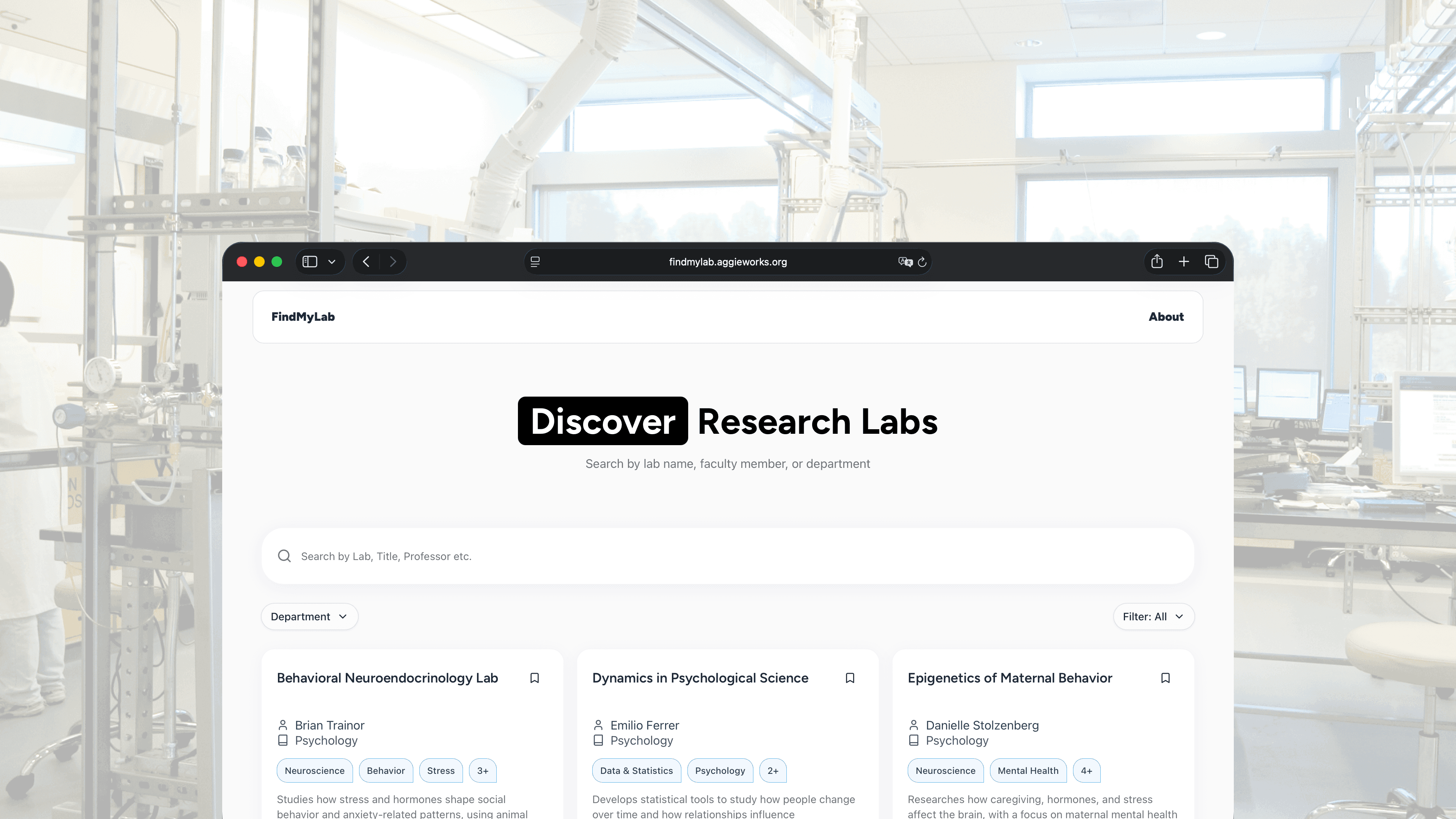
FindMyLab is a centralized platform that connects 35,000+ UC Davis students with over 130 research labs across majors and departments. Released in January 2025 by AggieWorks, a student-run software development organization, I was the founding product designer who launched a product to help make getting into research clear, accessible, and stress-free.
Context & Research
University students struggle to find research opportunities
UC Davis has a rich ecosystem of research labs as an R1 institution, but students still often struggle to break into research in areas aligned with their interests. Current discovery methods rely on direct faculty contact, departmental emails, or checking lab websites, making the process inconsistent, fragmented, and time-consuming.
My team saw this as an opportunity to develop a platform that streamlines the process of discovering and applying to UC Davis research labs.
Conducting user research among students
To discover pain points among students in finding research opportunities, we surveyed 30 undergraduate students and interviewed 5 of them for further insights. Key pain points included:
Difficulty finding information about available research opportunities
Discouragement in cold emailing professors (initial anxiety + not hearing back)
Not knowing where to start when getting into research
Conducting user research among faculty
With research labs as the other half of the equation, we also wanted to identify what they struggle with when recruiting undergraduate students. We reached out to 120+ graduate students, postdocs, and faculty members via email and gathered 58 survey responses. Their pain points included:
Receiving an overwhelming amount of interest from students
Difficulty gauging the capability and reliability of applicants
Disorganized method for keeping track of student emails
We also discovered that visibility is not an issue for research labs, considering that they receive more interest than they can recruit for. As such, student initiative in finding these labs is used as a gauge to determine dedication and interest in research opportunities.
MVP Testing
Defining an MVP
With these insights, I worked with my product managers to prioritize MVP features and identify product-market fit in a scrappy approach. Our objective was to support a faster, clearer, and more organized research recruitment process at UC Davis, and through these core features, we aimed to help students by helping professors:

Because of real-world implications on student prospects, we decided to create the MVP prototype through Figma and present it to professors to gauge viability.
Designing the prototype
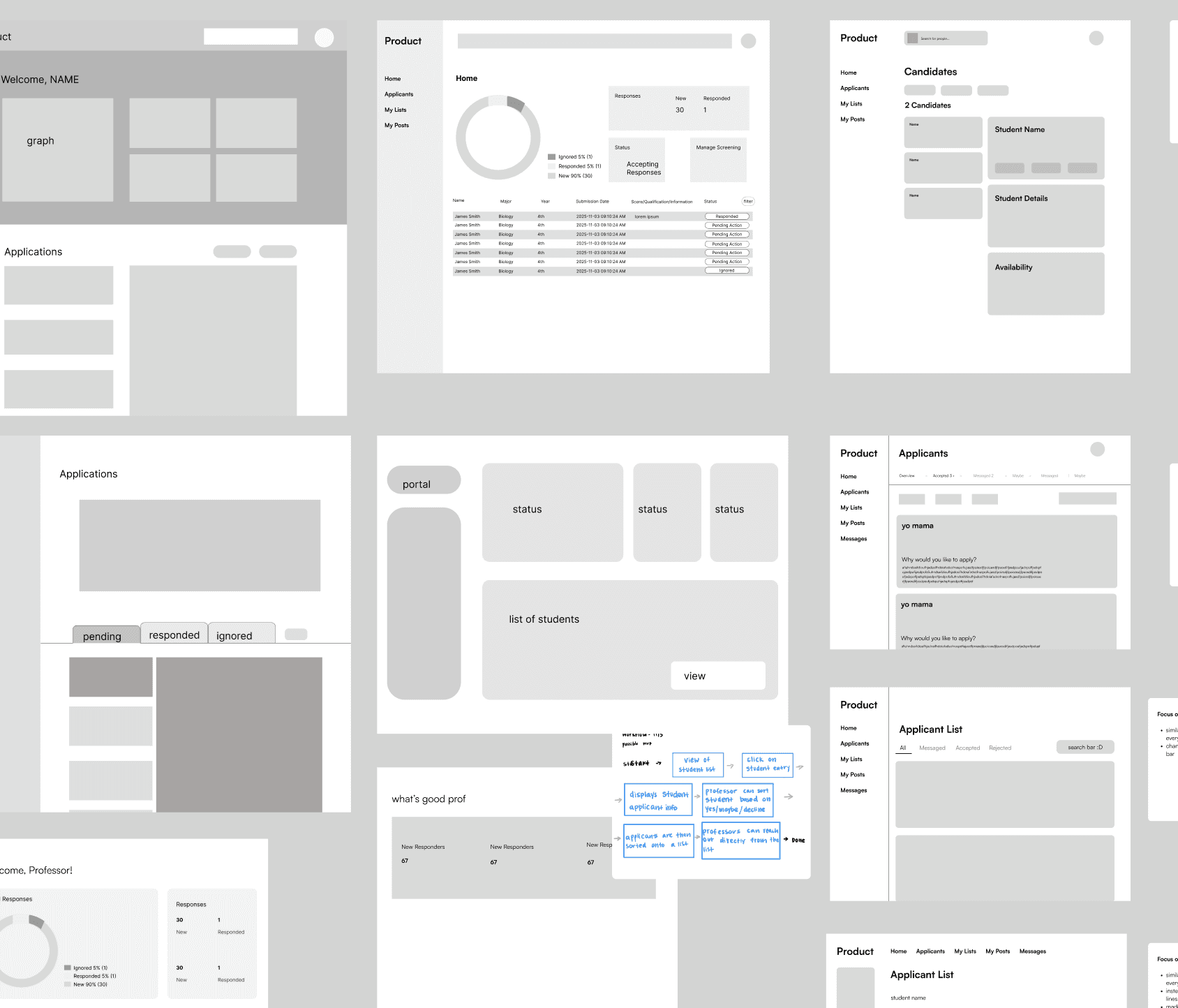
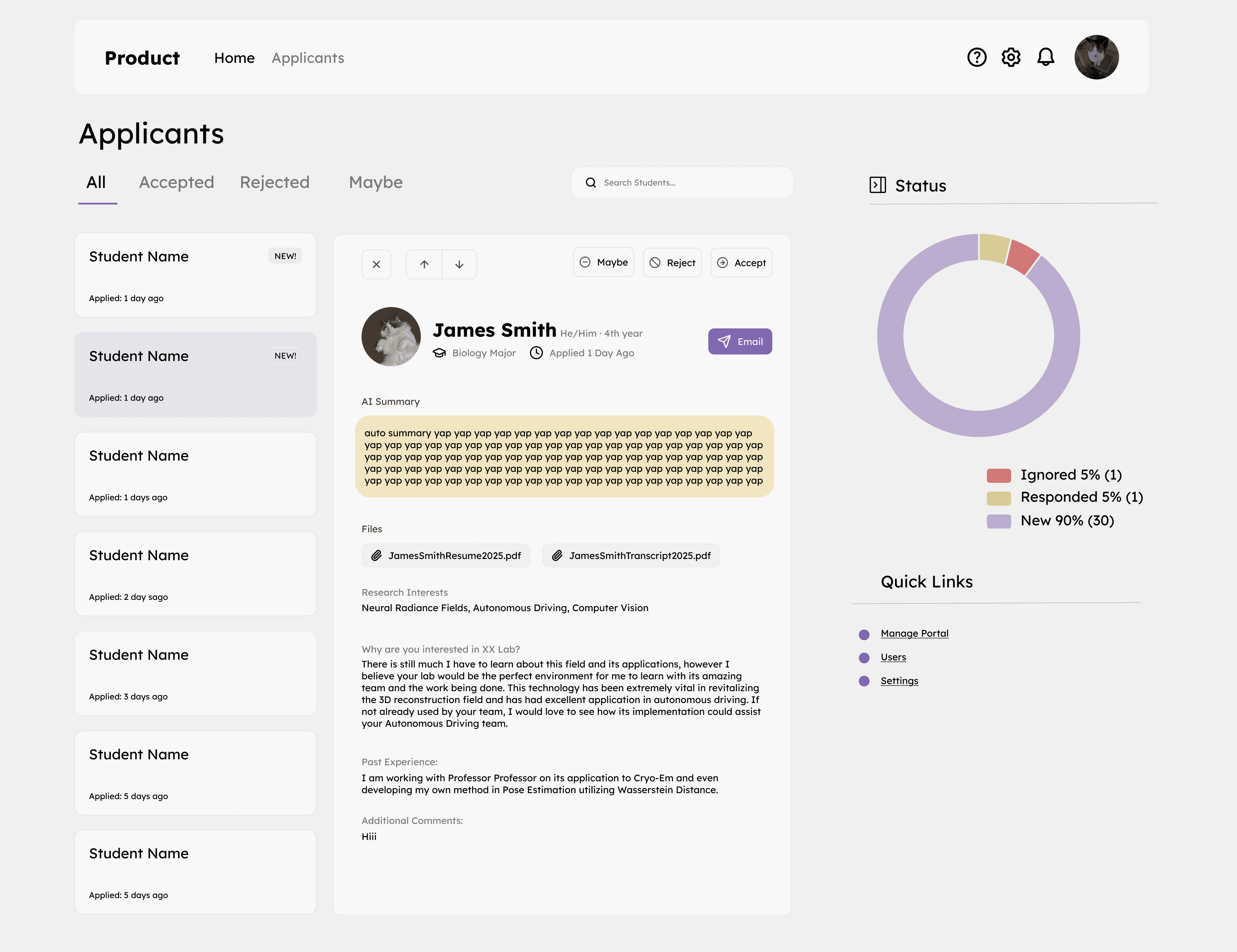
We quickly designed the professor dashboard of the MVP prototype, transforming lo-fi screens to a mid-fi wireframe in a matter of days. Accessibility and a potentially elderly target audience were kept in mind, however, in our design choices with typography and color.
Delivering the value proposition and gathering feedback
After prototyping the design to make it interactive, I edited a video walkthrough to send to professors via a survey form to collect feedback on our proposition. We also interviewed 3 other professors to understand how they would interact with and use our MVP. From our testing, we discovered that:
Professors feel that student initiative is still protected by securing the application portal behind a private link
The interface is intuitive and accessible, but unclickable items in the prototype caused confusion
The secondary call-to-action was not clearly conveyed, as professors assumed the dashboard would accept/reject applicants instead of merely organizing them
The proposition is useful enough to migrate to from their current workflow, especially for professors with numerous applications
Sanity Check
Rethinking scale, value, and feasibility
Before we began to build our product, we were able to invite a YC founder and alumni from our AggieWorks organization to offer product advice during a work session. His feedback stemmed from his own startup experience and concerns about sustainability, including:
The heavy reliance on professors being willing to set up an account, post their lab, and manually check the platform
Labs only recruiting at most once a quarter, with less than a handful of students recruited at a time
Our own bandwidth to build a product for only a fraction of the UC Davis population
We were ambitious in pursuing a professor-oriented approach, believing it to be a novel and creative way to streamline the recruitment process. However, his feedback put into perspective the many potential issues threatening the longevity of the product, and after some reflection, and in the spirit of “scrappiness,” we determined it would be more sustainable to build and iterate for 30,000 students that covers a wider use case.
MVP Testing 2
We built our MVP through a Google spreadsheet and handed out interest forms around campus, resulting in around 100 sign-ups to access our directory. We gathered feedback from these early-adopters through 9 user interviews.
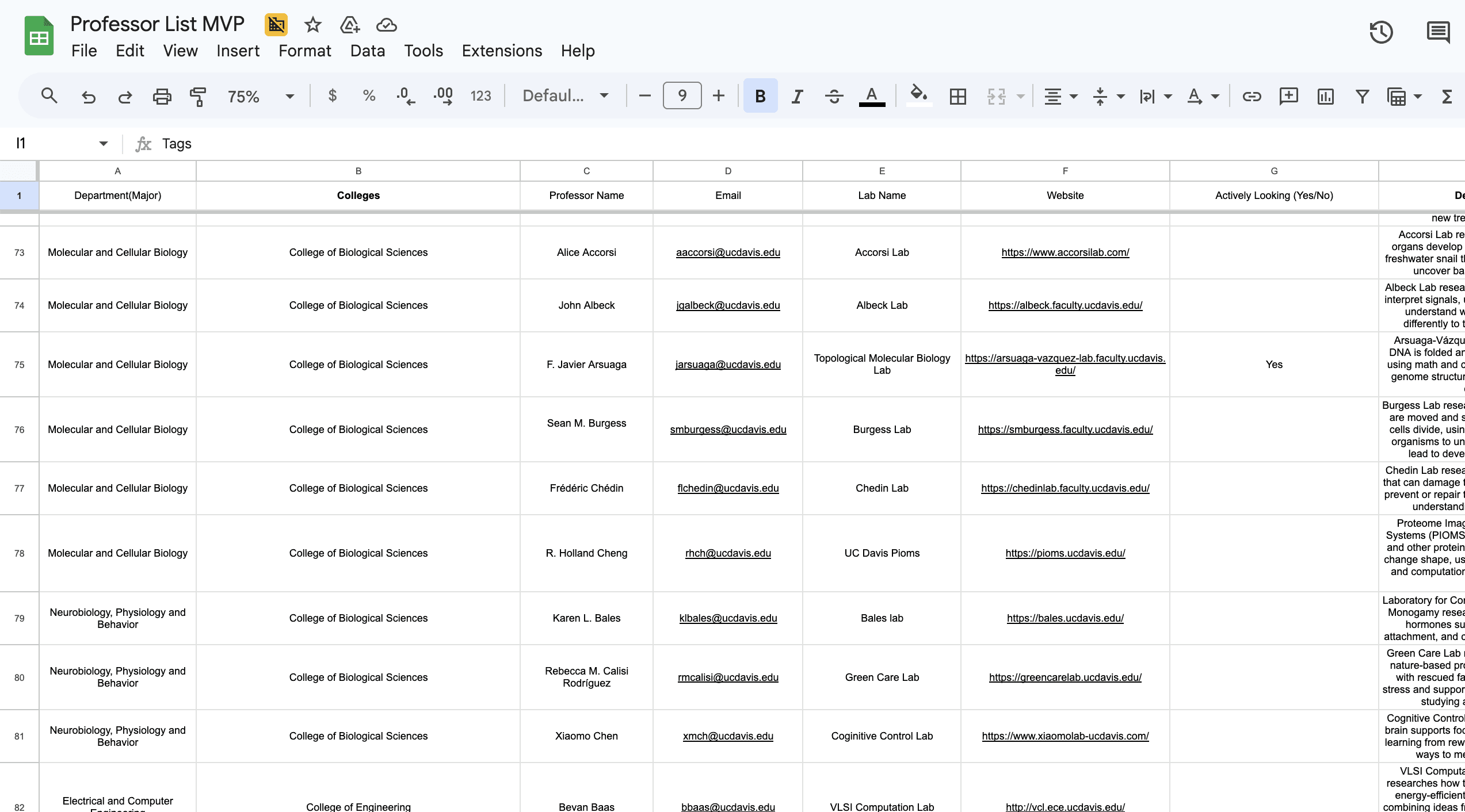
Each user saw potential in the MVP and suggested possible areas of growth, from professor involvement (our previous idea!) to student testimonies. But with the density of lab information, we realized what users wanted most was a way to filter this data and also a way to discover research interests, especially for students who have just started on their path to research.
With these insights and validation, we went forward to design a more intuitive interface with the additional features of tag and filters. Our MVP is as it is on https://findmylab.aggieworks.org/ as of February 2026, and with feedback from our supportive community, our team hopes to constantly iterate and grow FindMyLab with new features to support the undergraduate research endeavor at UC Davis.
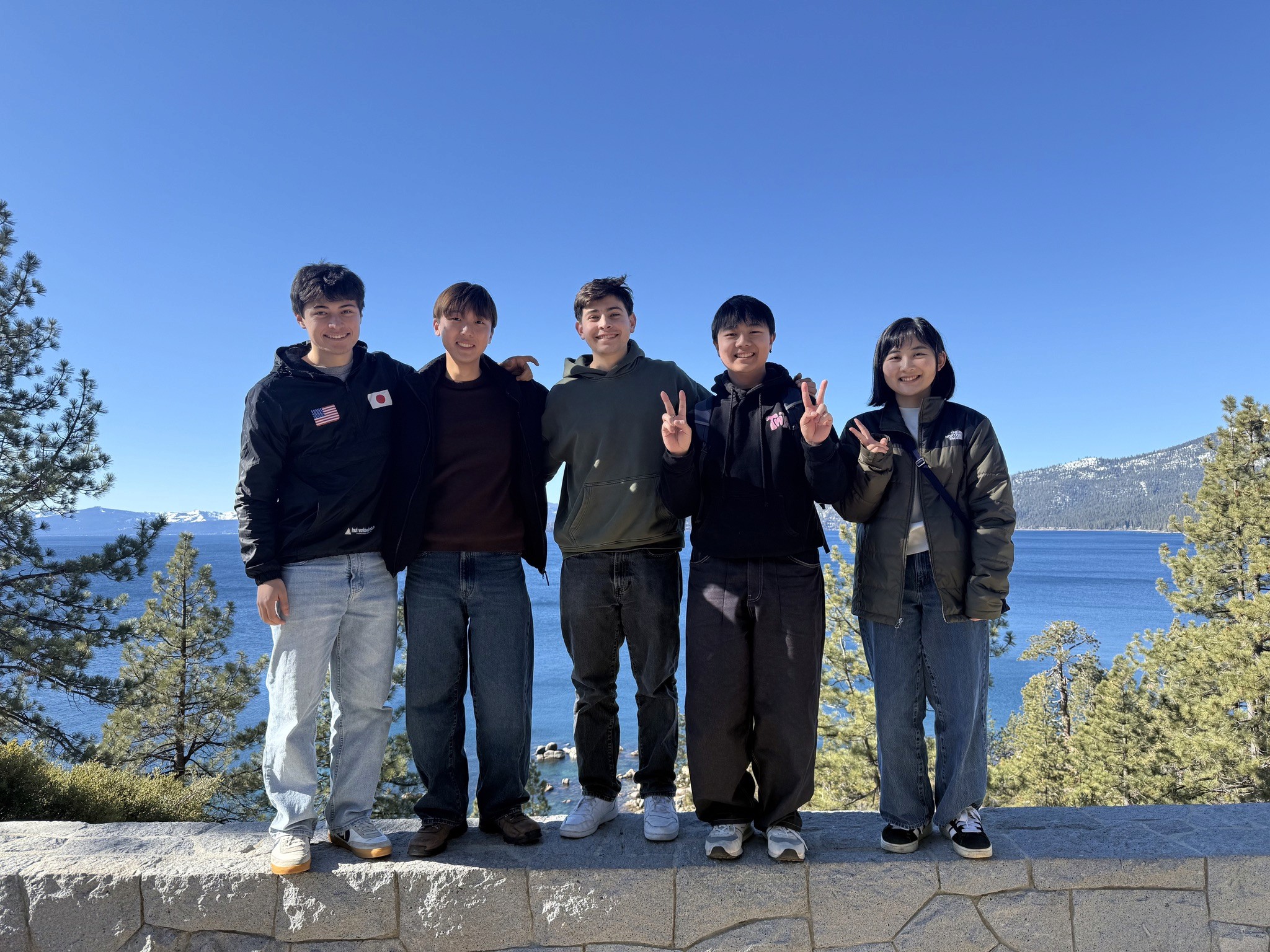
Our team at Tahoe!
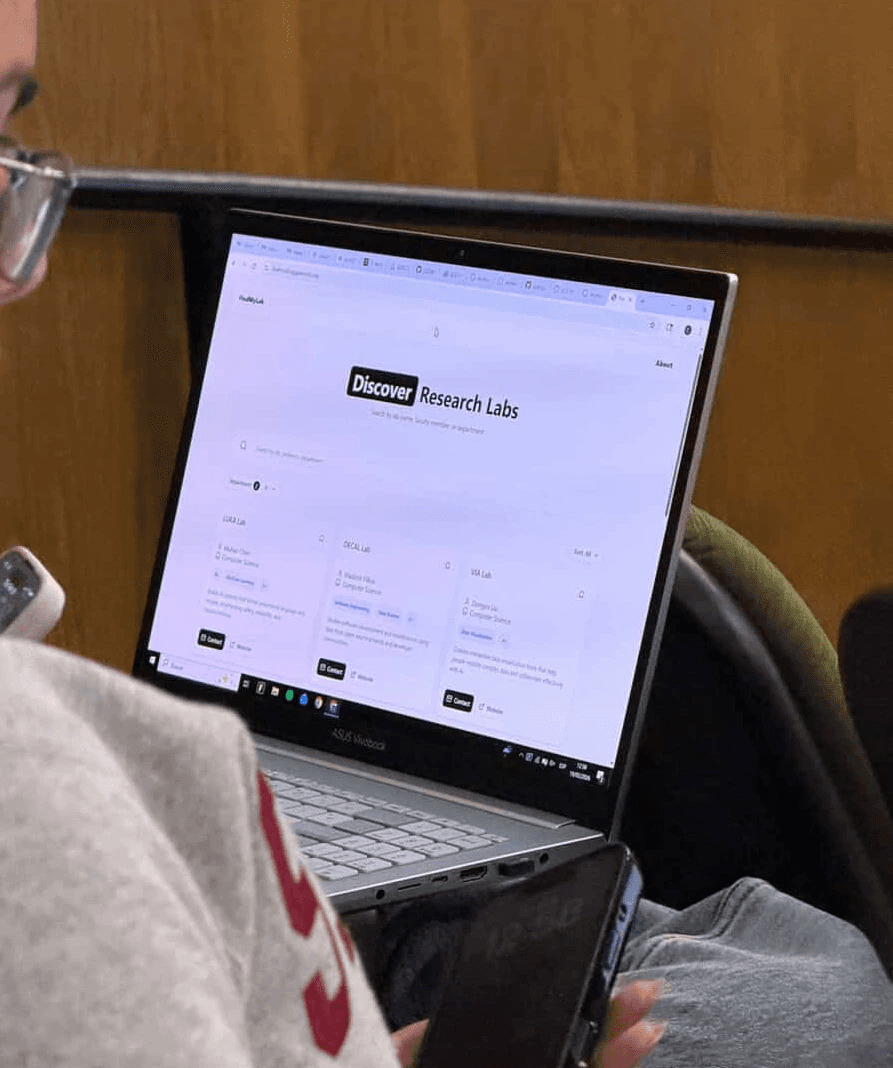
A student in class spotted using FindMyLab!
Next Project: